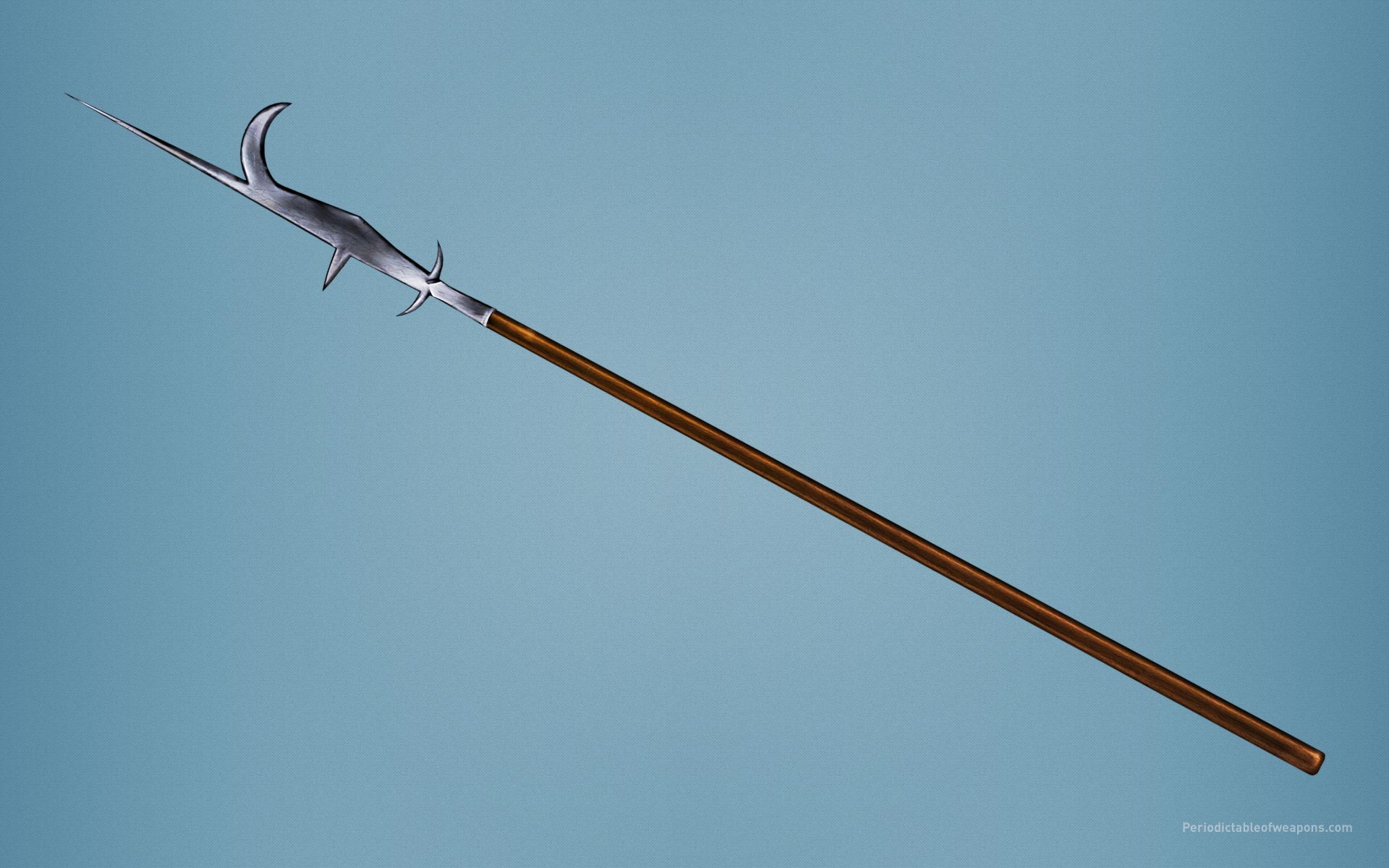
Bill
Specifications
- Type
- Polearm
- Origin
- England
- Era
- 14th–16th century
- Notable Users
- English infantry, town militias
- Epoch
- Middle Ages
History
The bill evolved from the agricultural billhook — a curved chopping blade used for hedge-laying and woodland management. Military bills added a thrusting spike, a back hook for pulling riders from horses, and a reinforced cutting edge. The weapon was favored by English militia and town levies because the basic cutting motion was already familiar from agricultural work. Bills were cheap to produce, effective against both mounted and dismounted opponents, and required less training than a sword or poleaxe. English bill-armed infantry remained effective into the early 16th century.
Significance
The bill exemplifies how agricultural tools become weapons of war. Throughout history, peasant levies have adapted the tools they already knew into fighting implements. The bill did this more successfully than almost any other conversion.
More from the Middle Ages
18 weapons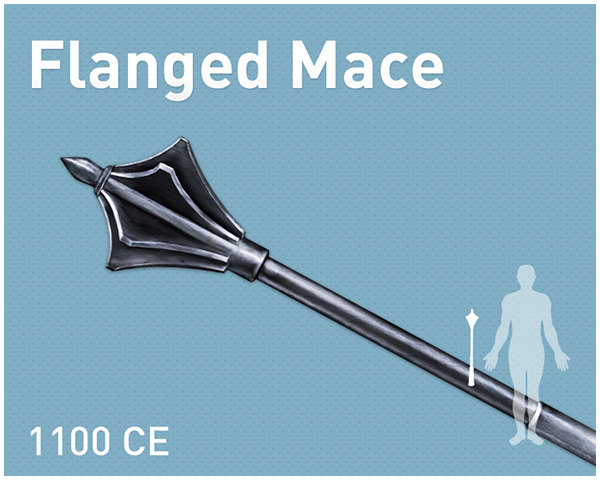
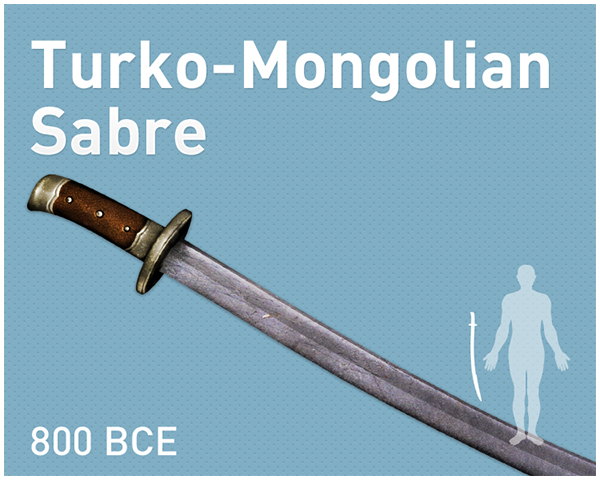
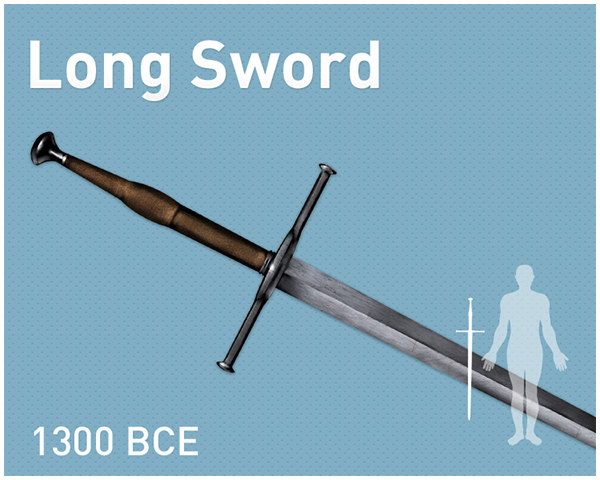
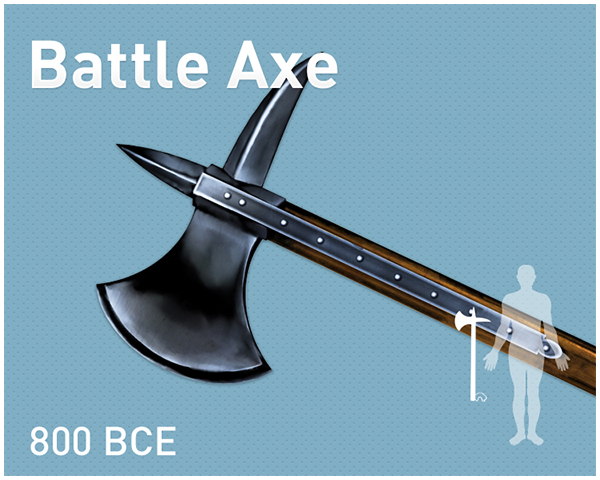
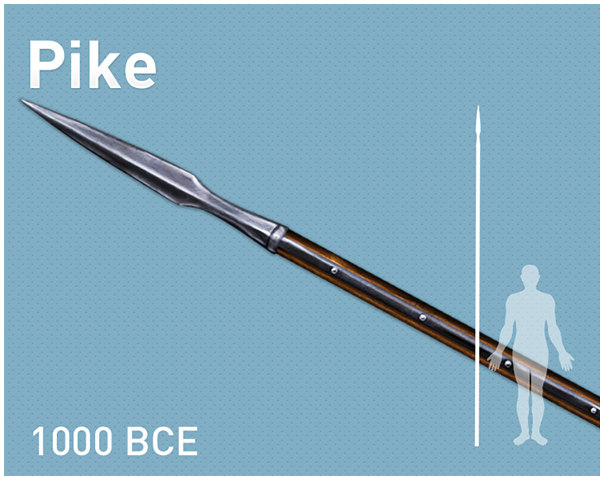
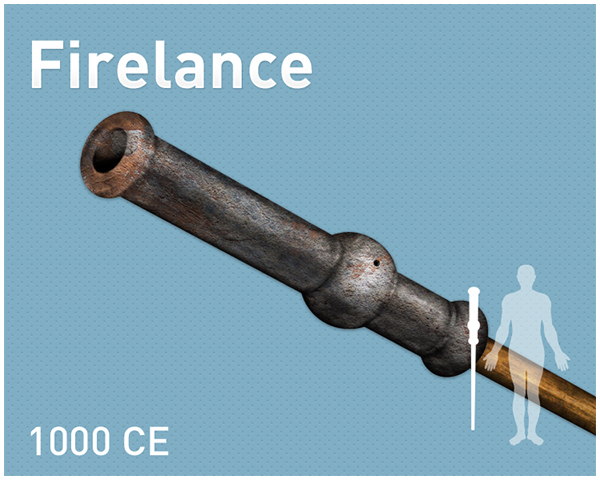
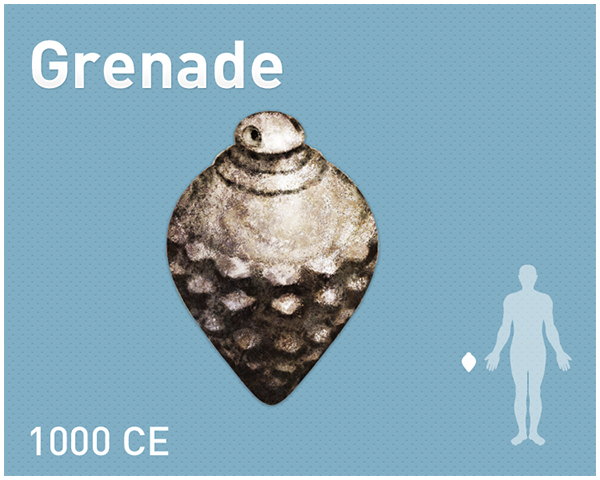
54 Weapons. Five Epochs. One Poster.
The Bill is one of 19 weapons from the Middle Ages featured on the poster.
Get the Poster