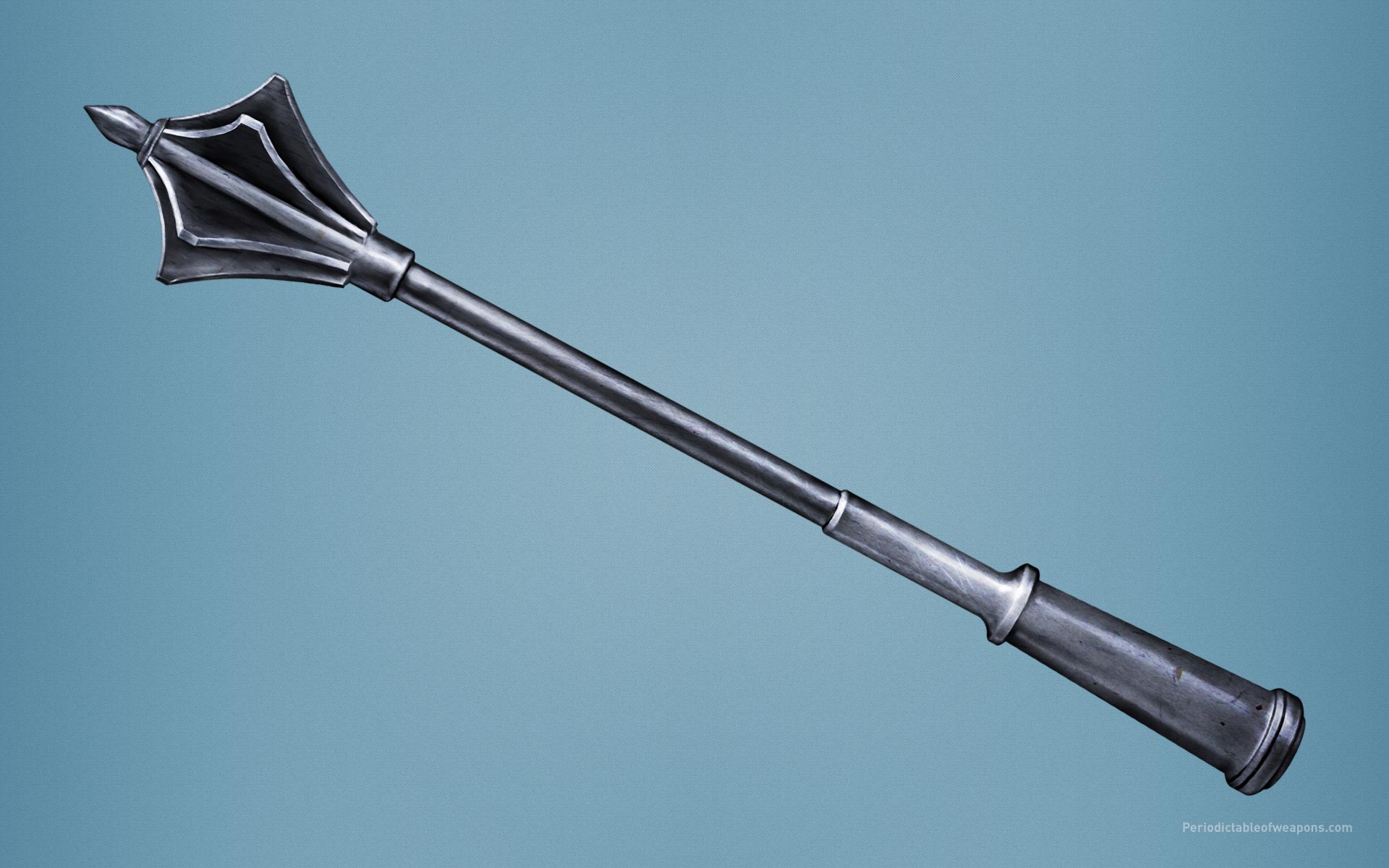
Flanged Mace
Specifications
- Type
- Bludgeon
- Origin
- Europe / Middle East
- Era
- 12th–15th century
- Notable Users
- Crusader knights, Eastern European cavalry, clergy-warriors
- Epoch
- Middle Ages
History
The flanged mace was a direct response to improving armor. By adding protruding metal flanges to the striking head, smiths concentrated impact force along narrow ridges that could dent, deform, and breach plate armor without needing to cut through it. The weapon was particularly favored by warrior-clergy, who adopted it under the dubious theological argument that a mace did not ‘shed blood’ as a bladed weapon would. Bishop Odo of Bayeux is depicted wielding a mace at the Battle of Hastings in the Bayeux Tapestry.
Significance
The flanged mace exemplifies the eternal arms race between offense and defense. Every improvement in armor drove innovation in the weapons designed to defeat it. The flanges were a direct answer to plate — concentrating force rather than distributing it.
More from the Middle Ages
18 weapons

54 Weapons. Five Epochs. One Poster.
The Flanged Mace is one of 19 weapons from the Middle Ages featured on the poster.
Get the Poster