5 weapons cataloged

Siege Weapons & Artillery: Catapults, Trebuchets & Cannons

Siege weapons exist because walls work. For most of human history, a well-built fortification could hold off armies for months or years. The catapult was the first serious answer: a machine that could throw heavy stones farther and harder than any human. The trebuchet refined the concept to its mechanical limit. Then the cannon arrived and made stone walls irrelevant overnight. The fall of Constantinople in 1453, when Ottoman bombards breached walls that had stood for a thousand years, is the dividing line between medieval and modern warfare.

The Siege Weapons & Artillery

Catapult
Bronze and Iron Ages · c. 400 BCE

Catapult

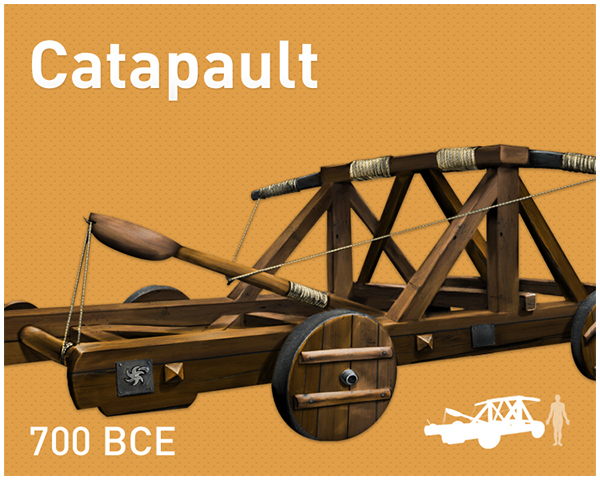
The catapult in its earliest form — the torsion-powered ballista and onager — was the artillery of the ancient world. Greek engineers in Syracuse developed the first catapults under Dionysius I around 399 BCE. Roman engineers refined the technology i...

Type: Siege Engine Origin: Greece / Mediterranean
Read full history →
Cannon
Middle Ages · 14th century onward

Cannon

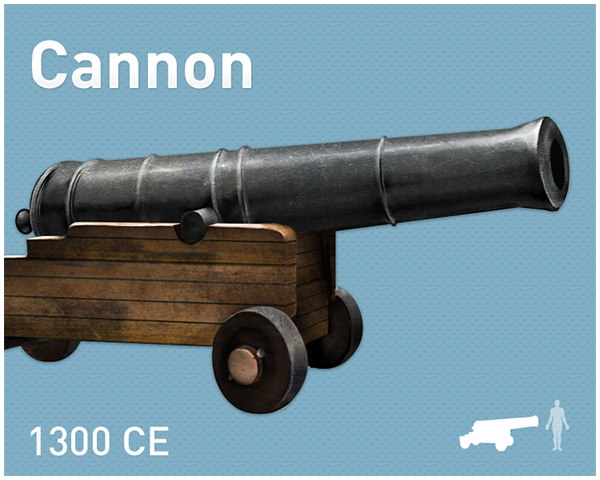
The cannon transformed warfare more completely than any weapon since the spear. Ottoman bombards breached the walls of Constantinople in 1453, ending the Byzantine Empire and the medieval concept of the impregnable fortress. Cannons could reduce in d...

Type: Artillery Origin: China / Europe
Read full history →
Grenade
Middle Ages · 8th–10th century

Grenade

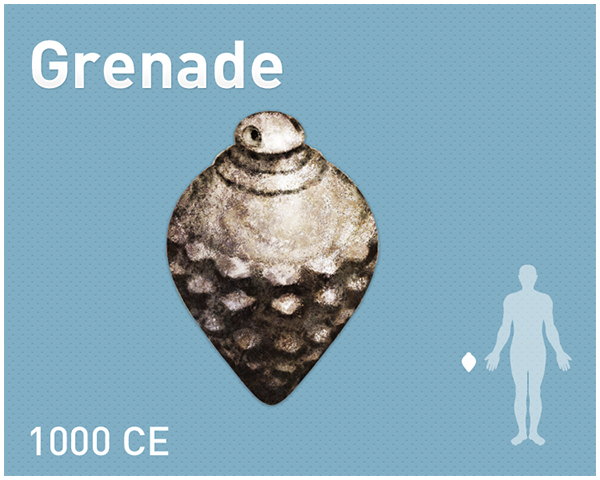
The earliest grenades were ceramic or glass containers filled with Greek fire, naphtha, or gunpowder compositions, thrown by hand at enemy fortifications and ships. Byzantine incendiary grenades terrorized Crusader forces. Chinese thunderclap bombs p...

Type: Explosive Projectile Origin: Byzantine Empire / China
Read full history →

54 Weapons. Five Epochs. One Poster.

All 5 siege weapons & artillery are featured on the poster.

Get the Poster